

Project publication · Internet of Things
Summary
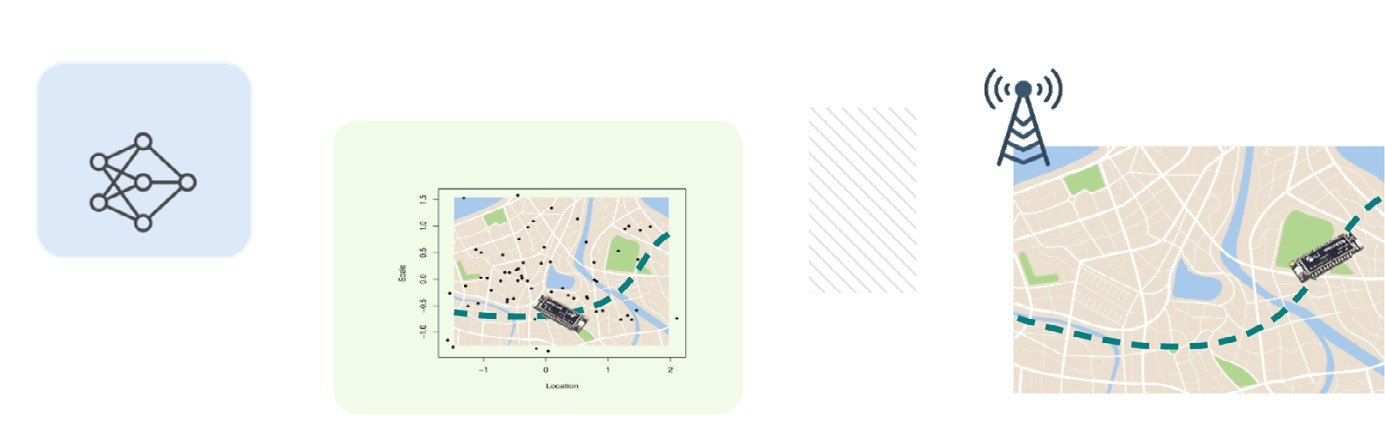
The article presents ADRL, a reconfigurable and energy-efficient transmission policy for mobile LoRa devices based on reinforcement learning.
Main contribution
The contribution makes it possible to adapt transmission to mobility and link conditions, aiming to improve performance and energy consumption compared with static policies in LoRa networks.
Resultados y alcance
Las simulaciones muestran que ADRL adapta la política de transmisión de dispositivos móviles y mejora el compromiso entre entrega, energía y ocupación del canal. Su efectividad depende de la movilidad, la recompensa y la capacidad de reconfiguración, aspectos que condicionan el traslado a hardware y tráfico reales.
Link with BoND1
For BoND1, ADRL strengthens the adaptive-control line in non-cellular IoT networks. The combination of mobility, energy efficiency and machine learning fits the objective of deploying scalable and sustainable B6G connectivity.
Project publication · Internet of Things
Summary
The paper presents ADRL, an energy-efficient and reconfigurable transmission policy for mobile LoRa devices based on reinforcement learning.
Bibliometric indicators
- JCR area
- Computer Science, Information Systems
- JCR year
- 2025
- Scholar query
- 26 October 2026
Main contribution
The contribution allows adapting the transmission to the mobility and link conditions, seeking to improve performance and consumption compared to static policies in LoRa networks.
Results and scope
Simulations show that ADRL adapts the transmission policy of mobile devices and improves the trade-off between delivery, energy and channel occupancy. Its effectiveness depends on mobility, reward and reconfigurability, aspects that determine the transfer to real hardware and traffic.
Link with BoND1
For BoND1, ADRL reinforces the line of adaptive control in non-cellular IoT networks. The combination of mobility, energy efficiency and machine learning fits with the objective of deploying scalable and sustainable B6G connectivity.
UPCT Repository: https://hdl.handle.net/10317/24193