

Project publication · Drones
Summary
El trabajo optimiza la detección de incendios a bordo como un sistema completo: la inferencia de IA en el borde, la detección a nivel de evento y la transmisión inalámbrica se ajustan conjuntamente para aumentar la autonomía del UAV sin perder una capacidad de detección útil.
Main contribution
El estudio ajusta cinco escalas de YOLOv5 sobre imágenes aéreas de incendios y evalúa la detección a nivel de evento tras ampliar el conjunto FLAME con seguimiento de fuegos entre fotogramas. En lugar de optimizar únicamente la precisión de la red neuronal, selecciona conjuntamente el tamaño del modelo, el umbral de confianza y la frecuencia de inferencia, contabilizando la energía de procesamiento y de transmisión ascendente.
Resultados y alcance
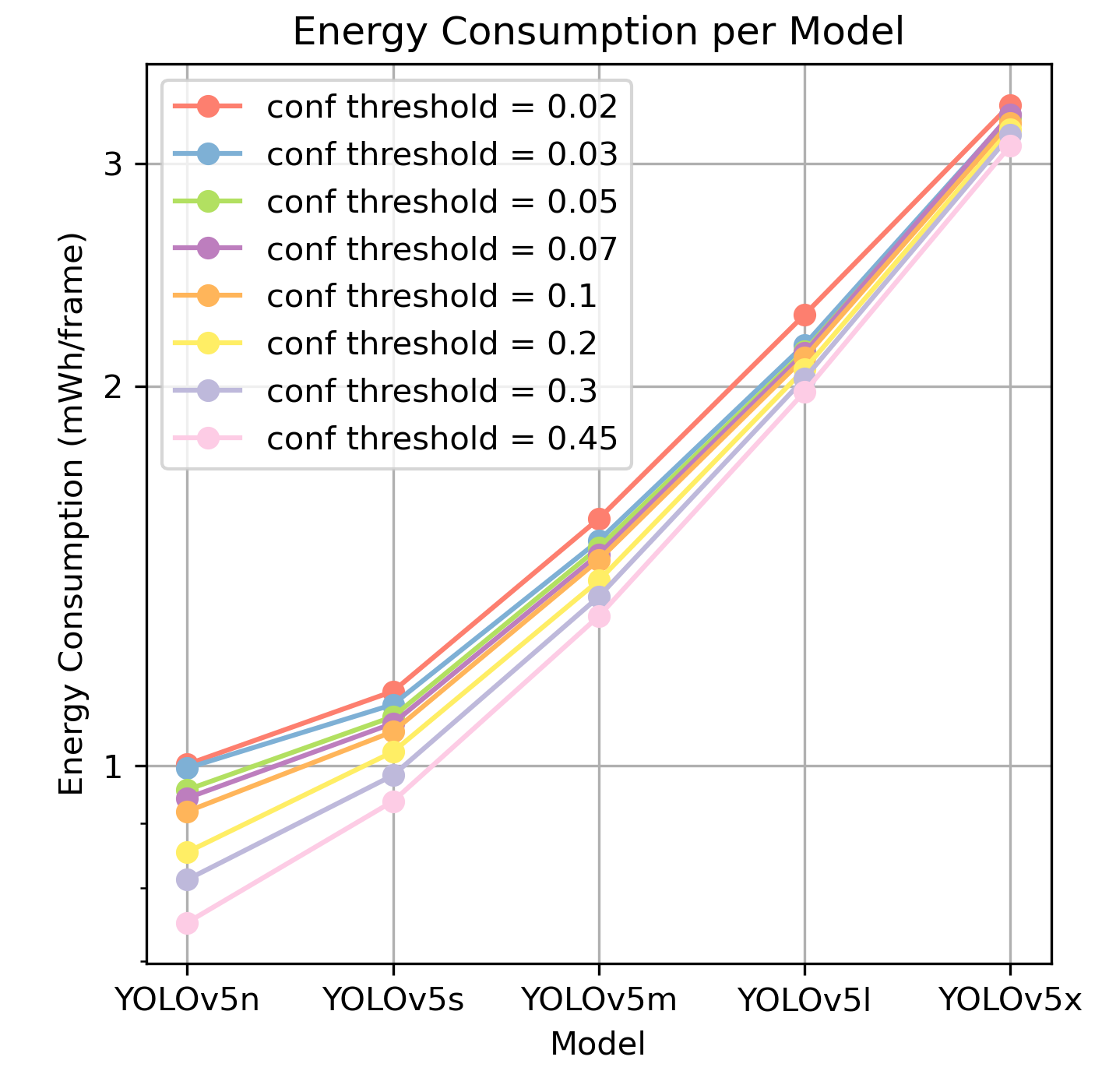
Las variantes compactas de YOLOv5 ofrecen el mejor compromiso entre precisión y energía. El punto de operación seleccionado reduce el consumo hasta 4,4 veces con una pérdida de recall de solo el 0,03 %, mientras que el submuestreo temporal mantiene una detección casi perfecta a nivel de evento para incendios persistentes. Los autores delimitan también el alcance de la evaluación: una secuencia de vuelo sobre quemas prescritas y modelos energéticos tomados de la literatura, que deberán recalibrarse para otras plataformas, sensores y enlaces.
Link with BoND1
BoND1 persigue conectividad escalable y sostenible para IoT masivo y futuros entornos B6G. Este trabajo contribuye en el borde de esa arquitectura: reduce la frecuencia con la que el UAV debe inferir y transmitir sin perder la información a nivel de evento. El control conjunto de computación y comunicación limita la energía y el tráfico generado, y el marco puede recalibrarse para enlaces sub-GHz u otras tecnologías no celulares aplicables a monitorización remota resiliente.
Project publication · Drones
Summary
This work optimizes onboard wildfire detection as one complete system: edge-AI inference, event-level detection and wireless transmission are jointly adjusted to extend UAV endurance without sacrificing useful recall.
Bibliometric indicators
- JCR area
- Remote Sensing
- JCR year
- 2025
- Scholar query
- 26 October 2026
Main contribution
The study fine-tunes five YOLOv5 scales on aerial fire imagery and evaluates detection at event level after extending the FLAME dataset with multi-frame fire tracks. Instead of optimizing only neural-network accuracy, it jointly selects model size, confidence threshold and inference stride while accounting for inference and uplink energy.
Results and scope
The compact YOLOv5 variants provide the strongest accuracy-energy trade-off. The selected operating point reduces energy consumption by up to 4.4 times with only a 0.03% recall reduction, while temporal subsampling preserves near-perfect event-level detection for persistent fires. The authors also identify the limits of the current evaluation: one prescribed-burn flight sequence and literature-derived energy models, which should be recalibrated for other platforms, sensors and links.
Link with BoND1
BoND1 seeks scalable and sustainable connectivity for massive IoT and future B6G environments. This work contributes at the edge of that architecture: it reduces how often the UAV must infer and transmit while retaining event-level information. Jointly controlling computation and communication limits energy and traffic overhead, and the framework can be recalibrated for sub-GHz or other non-cellular links considered in resilient remote monitoring.